
Marsyas’ Voice Still Echoes Across Anatolia
From Marsyas’ Flute to Hakan Tosun’s Camera, From Apollo to COP31
Let the world hear!
Let the defenders of life hear!
Let every Marsyas know:
We expect nothing from Apollo!
A journey from the ancient mythology of Anatolia to today’s ecological struggles…
From Marsyas’ defiance of Apollo to Bergama, from Senoz to Akbelen, from Munzur to the Perşembe Plateau, and from the Büyüknohutçu couple to Hakan Tosun, we bring more than thirty years of resistance to an international readership.
In our English-language article, “Marsyas’ Voice Still Echoes Across Anatolia,” we explore the concepts of “Right to the Village,” “Place–Decision Relationship,” and “Spaces of Life,” which have emerged and evolved from grassroots struggles and resistance on the ground, through the unifying idea of ‘the will to live with dignity’.
Drawing on these experiences, we put forward our proposals for confronting ecological destruction and open a discussion about the kind of life and future we want.
As COP31 convenes in Antalya, we ask:
Who will decide the future of the planet and our spaces of life? Those seated at Apollo’s table, or those struggling on the ground?
Duysun bütün dünya!
Duysun yaşamı savunanlar!
Bilsin bütün Marsyaslar:
Apollon’dan hiçbir beklentimiz yok!
We are publishing our English article today, followed by the full text of our in-depth article while COP31 is still underway.
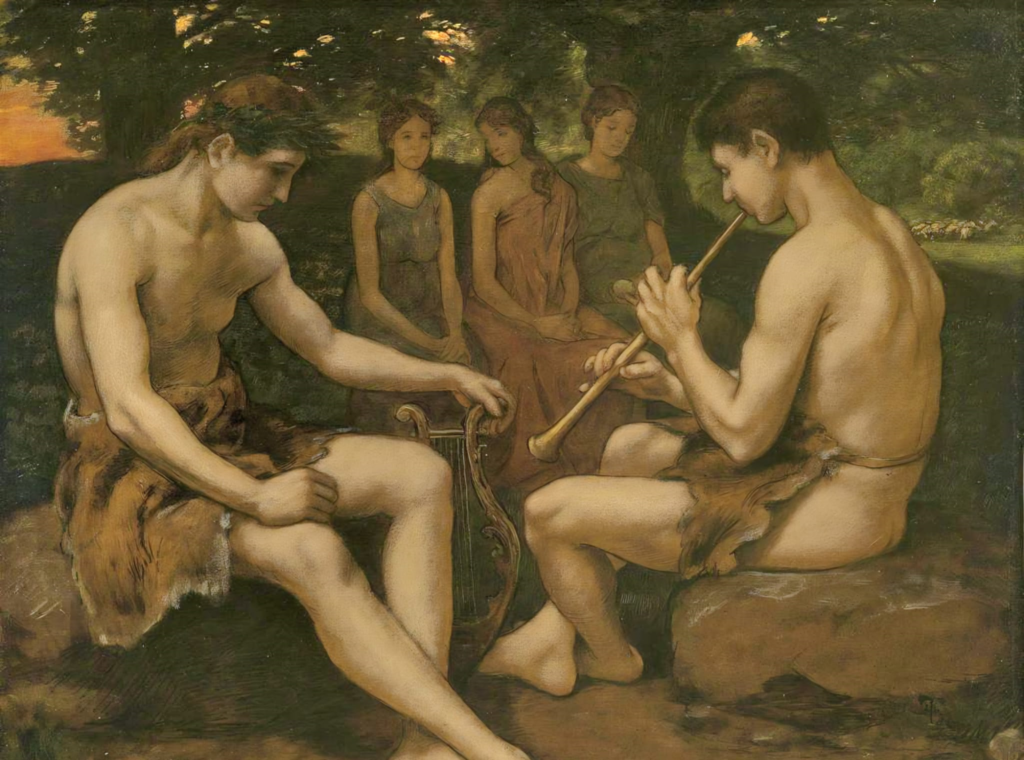
WHAT WAS MARSYAS’S CRIME?
Thousands of years ago, in the ancient Phrygian lands of Anatolia, Marsyas challenged Apollo, the god of music. With his flute, known in ancient Greece as aulos, he stood before a god and made his own voice heard. Apollo won the contest. But victory was not enough. He tied Marsyas to a tree and flayed him alive.
The tragedy of Marsyas lay not in losing the contest, but in the absolute power claimed over his life by an authority that could not tolerate being challenged.
Who, then, gave Apollo the right to decide whether Marsyas should live or die?
In Ovid’s account, the tears shed for Marsyas become a river. Apollo destroyed his body, but he could not silence his voice.
The myth is not a historical account of modern political power. Yet it raises a question that remains relevant wherever authority claims the right to determine the lives and futures of others: does possessing power confer the right to rule over life?
More than two thousand years later, in Anatolia, Ali Ulvi Büyüknohutçu, who defended forests and mountains against destruction, was asked:
“You know who you are up against and how powerful they are. Aren’t you afraid?”
His answer recalled the defiance of Marsyas:
“No, I am not afraid! Those who are right are strong. Those who are wrong are weak. We are strong. We are the ones who are right!”
In 2017, Ali Ulvi Büyüknohutçu and his wife, Aysin Büyüknohutçu, were murdered in Antalya, where they had been resisting the destruction caused by stone quarries. Nine years later, government delegations, corporate representatives and financial institutions are gathering in the same city for COP31 to discuss the future of the planet.
In Antalya, where the Büyüknohutçu couple were murdered while defending their living environment, the world is now discussing how to protect life.
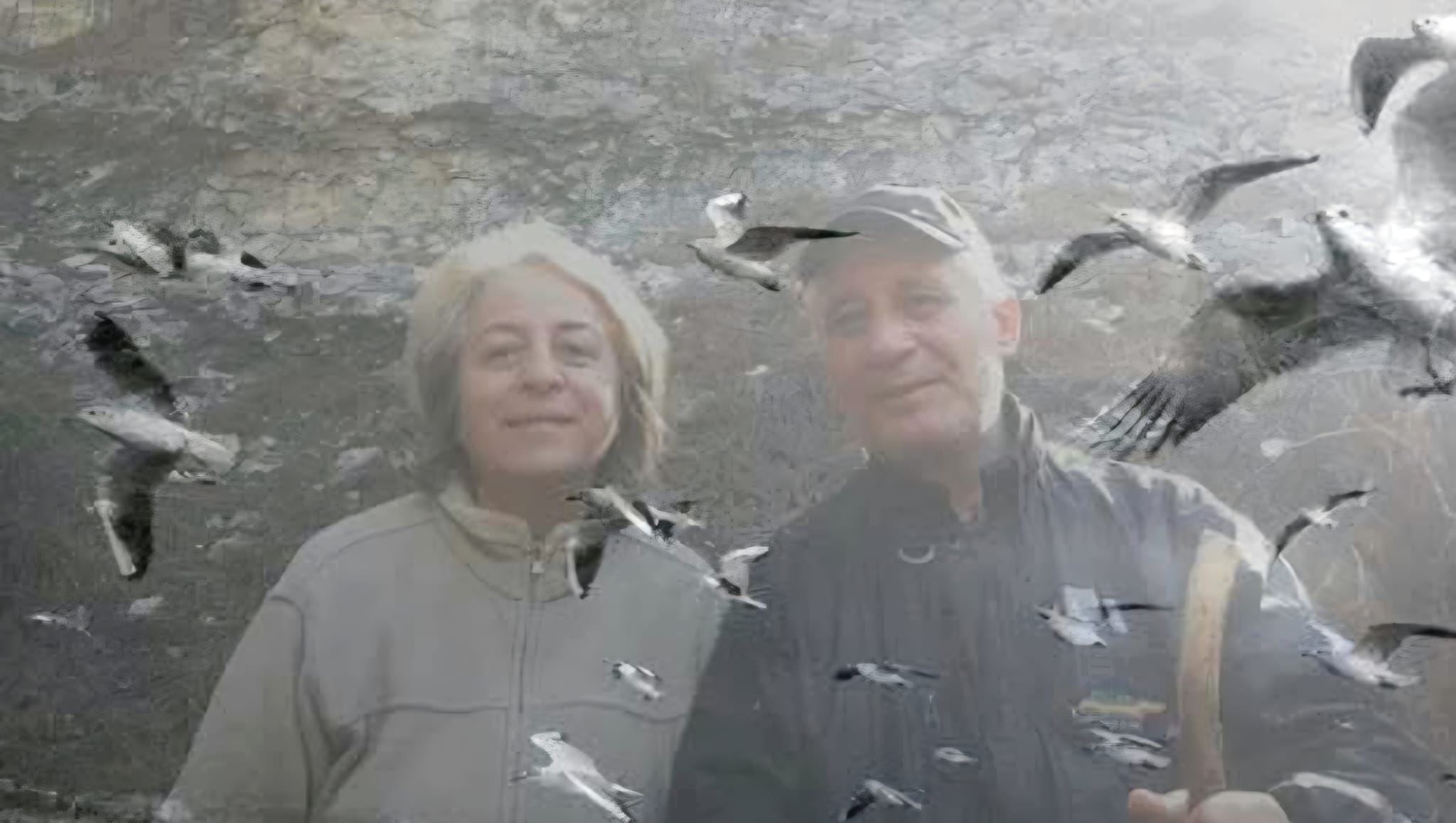
This historical coincidence raises a question that international climate politics cannot ignore: what place is given to the people who defend forests, rivers, agricultural land and other spaces of life, often at considerable personal risk?
The Büyüknohutçu couple’s struggle concerned their immediate living environment. COP31 addresses a global crisis. These different scales of political action intersect wherever decisions about mining, energy, forests and land determine the future of communities.
Who participates in those decisions? Who has the authority to make them? Who bears their consequences?
Marsyas and Büyüknohutçu belong to profoundly different historical worlds. Yet their stories illuminate a shared ethical principle: the possession of power does not establish the justice of its exercise.
Apollo could kill Marsyas, but he could not erase his voice from history. Nor could the murder of the Büyüknohutçu couple erase the memory of their resistance.
FROM BERGAMA TO AKBELEN: A HISTORY OF RESISTANCE
We know what is on COP31’s agenda. But what is on the agenda of Türkiye’s ecological movement?
During the 1990s, as resistance to neoliberal globalisation developed across the world, villagers in Bergama were defending their land, water and livelihoods against cyanide-based gold mining.
In Mexico, the Zapatistas challenged dispossession and domination. In India’s Narmada Valley, communities resisted displacement associated with large dams. In Nigeria, the Ogoni people confronted the environmental devastation caused by oil extraction.
Although shaped by different historical circumstances, these struggles raised related questions about land, collective rights and the authority to determine the future of communities.
Bergama became one of Türkiye’s emblematic expressions of this global resistance. Over more than thirty years, villagers, farmers, women, workers and ecological organisations have developed a diverse movement through their struggles, solidarity and accumulated experience.
Türkiye’s ecological movement belongs to the global history of resistance through its own experiences, sacrifices and achievements.
The cry “Karıncanın kardeşi var!” — “The Ant Has Sisters and Brothers!” expresses the solidarity that has developed across this history.
In Senoz, women resisting hydroelectric projects confronted construction machinery, sometimes throwing stones to defend their valley. Among them was Meliha Hala, who cursed those cutting the trees:
“You cut and pruned those trees from top to bottom. May God cut and prune you in the same way!”
At Samistal Plateau, Havva Ana challenged the authority imposed upon local communities:
“What court? We are the court! What is the state? There is no state without the people. The state exists because of us!”
Her words asserted the right of communities to determine the future of the lands on which their lives depend.
In Dersim, the defence of Munzur’s sacred waters continues to unite ecological resistance with living cultural memory. In Cerattepe and the Kaz Mountains, communities have resisted mining and forest destruction.
Today, in Akbelen, Nejla Işık expresses the threat facing her village:
“They are going to uproot us.”
Her daughter Esra Işık, a young woman in her twenties, carries this resistance into a new generation:
“I am a daughter of this land. I am a village girl.”
After 42 days in detention, Esra declared her determination to continue the struggle from where she had left off.
From Bergama to Akbelen, these voices carry the collective memory, solidarity and will to live with dignity of Türkiye’s ecological movement.
Who has the right to decide the future of our spaces of life?

THE RIGHT TO DECIDE AND THE WILL TO LIVE WITH DIGNITY
Three interconnected concepts help express the political and ecological significance of these experiences: “Right to the Village,” “Place–Decision Relationship,” and “Spaces of Life.”
Right to the Village demands meaningful decision-making authority for villagers and local communities over matters affecting their lives and collective future.
Place–Decision Relationship challenges the separation of political authority from the people and environments affected by its exercise.
Spaces of Life recognises the interconnected relationships among land, water, forests, labour, culture, human communities and non-human life. These relationships cannot be reduced to resources valued through commercial calculation alone.
These concepts do not assume that every local decision is automatically ecologically just. Democratic authority must respect individual rights, minority voices, ecological integrity and the interests of future generations.
Their common ethical foundation is the will to live with dignity.
Dignity finds political expression in the refusal of domination, the freedom to shape one’s future and the collective capacity to make decisions without surrendering that authority to others.
This principle concerns the ecological movement itself. Organisations, political parties, funding bodies and solidarity networks may contribute knowledge, resources and coordination. Their contributions do not grant them the right to replace the decision-making authority of communities defending their spaces of life.
Solidarity must strengthen the capacity of communities to decide, rather than substitute another authority for their own.
FROM HAKAN TOSUN’S CAMERA TO COP31
In July 2025, Türkiye adopted Omnibus Law No. 7554, described by sections of the ecological movement as the “Occupation Law.” Its provisions concerning mining and energy investments intensified concerns about villages, olive groves, forests, agricultural land and the decision-making rights of affected communities.
The controversy reflected a wider conflict between investment priorities, ecological protection and democratic legitimacy.
In October 2025, journalist and documentary filmmaker Hakan Tosun, who had spent years documenting ecological struggles across Anatolia, died following an assault in Istanbul.
There is no established causal connection between the adoption of the law and Hakan’s killing. His death nevertheless became part of the collective memory of those who knew his work and recognised the importance of documenting struggles that might otherwise remain unseen.
Through his camera, Hakan carried the voices of defenders of life beyond the places where their struggles unfolded. His work connected communities and helped preserve the memory of resistance.
His words speak to the continuity of these struggles:

“The struggle goes on, and we will continue to be part of it.”
Marsyas raised his voice through his flute. Hakan used his camera to make the voices of others heard. Their experiences cannot be equated, but the image of Marsyas invites reflection on voices that authority cannot permanently silence.
The voices of those who were killed could not be silenced. The will of those defending life could not be broken.
As COP31 convenes in Antalya, this historical memory encounters the promises and limitations of global climate politics.
International negotiations address emissions reductions, adaptation, climate finance and the transition away from fossil fuels. These questions matter. Yet international agreements do not automatically resolve the conflicts arising when mining, energy and infrastructure projects threaten the living environments of local communities.
Even the transition towards lower-carbon energy systems raises questions about mineral extraction, ownership, ecological limits and decision-making authority. An energy project cannot be assessed through its emissions profile alone. Its consequences for forests, water, agricultural production, biodiversity and affected communities must also be considered.
The question is not whether climate action is necessary. It is who determines its direction, whose interests shape it, and whether those most affected can exercise meaningful authority over decisions concerning their lives.
For us, ecological justice requires confronting the relationships of production, ownership and political power that have contributed to environmental destruction. It also requires protecting the independence of movements challenging those relationships.
We do not place our future at the mercy of states or the conscience of corporations. Nor do we regard participation in a climate summit as a substitute for continuing struggles on the ground.
Rather than choosing between different forms of ecological destruction, we defend the right to determine our own future.
This determination reaches beyond resistance. It invites us to consider the commons, ecological agriculture, solidarity economies and democratic self-organisation as foundations for ways of living within ecological limits.
The will to live with dignity means defending the conditions of life while seeking to build a free, equal and ecological future.
THE COMPREHENSIVE ARTICLE: CONTINUING THE CONVERSATION
Our forthcoming comprehensive article, “Marsyas’ Voice Still Echoes Across Anatolia,” will explore more than thirty years of ecological resistance in Türkiye, from Bergama to Akbelen, within the wider history of struggles against neoliberal globalisation and ecological destruction.
Drawing on the experiences of grassroots movements, it will examine the right of communities to determine their own future, the financial, political, organisational and intellectual independence of the ecological movement, the limits of global climate governance, and the possibilities of building a free, equal and ecological future.
At its heart lies a question that connects Marsyas’ defiance of Apollo with the struggles of today: Who has the right to decide the future of life?
THE VOICE THAT CANNOT BE SILENCED
The ten sections follow a common thread:
the defence of life cannot be separated from the right to decide its future.
The struggles of Anatolia’s villages, valleys and forests have accumulated experiences, knowledge and collective memory that no international summit can replace. Their significance extends beyond the places where they began, contributing to a worldwide conversation about ecological justice, freedom and democratic self-determination.
We do not ask Apollo to grant us the right to live. We question the authority that claims the power to decide our future without us.
Let the world hear!
Let the defenders of life hear!
Let every Marsyas know:
We expect nothing from Apollo!
A CALL FOR SOLIDARITY WITH THE DEFENDERS OF LIFE IN TÜRKİYE
We invite ecological movements, grassroots organisations, researchers, journalists and defenders of life around the world to stand in solidarity with the villagers and local communities resisting mining, hydroelectric projects, deforestation and ecological destruction across Türkiye.
From Bergama to Akbelen, from Senoz to Cerattepe, these struggles are part of a shared global effort to defend land, water, forests and the right of communities to determine their own future.
Several ecological networks and grassroots initiatives contribute to these struggles through different forms of organisation and solidarity.
The Karıncalar Ecology Network (Karıncalar Ekoloji Ağı) is a nationwide, individual-based ecological network bringing together defenders of life from different regions of Türkiye.
The Ecology Union (Ekoloji Birliği) brings together local ecological organisations and movements in a nationwide network for collective struggle and solidarity.
The Life and Solidarity Caravan (Yaşam ve Dayanışma Yolcuları) is a grassroots activist group that builds bridges between local resistance movements, fostering direct solidarity, mutual support and the sharing of experiences.
These networks and initiatives contribute to the collective memory, continuity and solidarity of ecological struggles while recognising the autonomy and decision-making rights of local communities.
Through the Life and Solidarity Caravan, we invite international friends and organisations to learn about these struggles, amplify the voices of local communities and build lasting relationships of solidarity grounded in mutual respect, independence and the right of communities to make their own decisions.
International solidarity begins with direct relationships between those defending life. We welcome exchanges of experience, independent reporting, research collaboration and lasting connections with grassroots struggles across Türkiye.
Stand with the villagers. Stand with the defenders of life. Support their struggles and their right to decide.
The Ant Has Sisters and Brothers!
SOLIDARITY AND CONTACT
Life and Solidarity Caravan (Yaşam ve Dayanışma Yolcuları)
For international solidarity, information exchange and collaboration:
Email: [email protected]
Direct WhatsApp Messages to the Author:
+90 535 831 49 99
International journalists, researchers, grassroots organisations and defenders of life are welcome to contact us by email or reach the author directly via WhatsApp for information, correspondence and solidarity.
ABOUT THE AUTHOR
Born in Istanbul to parents from a Black Sea village, where I spent part of my childhood, I am an academic and a defender of life who has participated in grassroots struggles across Türkiye over the past two decades, defending rivers, forests, mountains, villages and the communities whose lives depend on them.
I write to bring the voices, experiences and demands of those defending their spaces of life to an international audience.
İsmail Akyıldız /13 November 2026